
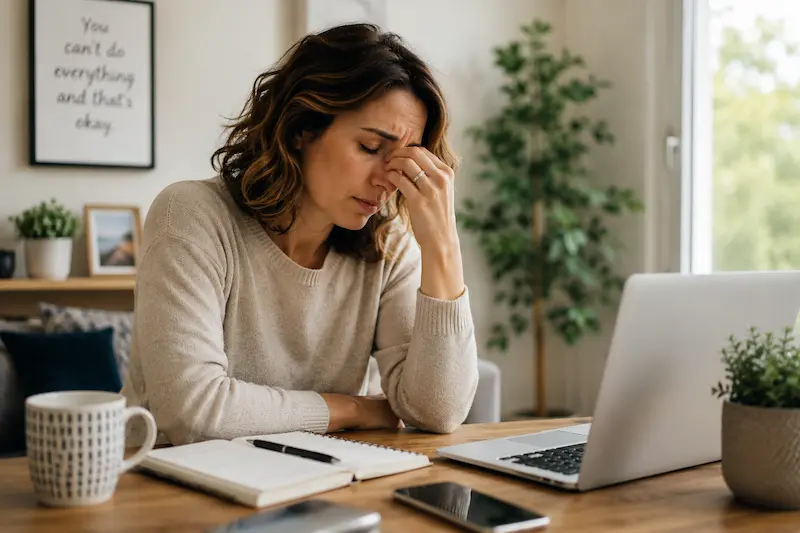
Stress and anxiety are closely connected. A little stress can sometimes help us focus, take action or deal with everyday demands. But when stress becomes constant, it can start to affect the way we think, feel and respond to life.
You may notice that you feel more on edge, more emotional, more tired or more easily overwhelmed. Small things may start to feel bigger than they really are. Your mind may become busier, your body may feel tense, and anxiety may appear more often.
If this sounds familiar, stress may be playing a part in keeping your anxiety going. Hypnotherapy can help by calming the nervous system, reducing unhelpful thought patterns and supporting a steadier, more balanced response.
If anxiety is already affecting your day-to-day life, you may find my anxiety treatment page helpful.
What Is the Difference Between Stress and Anxiety?
Stress is usually a response to pressure. It may be linked to work, money, family responsibilities, relationships, health worries or simply having too much to do. When the pressure reduces, stress often eases.
Anxiety can feel similar, but it is often more focused on what might happen. You may worry about the future, imagine worst-case scenarios or feel a sense of fear even when there is no immediate danger.
In real life, the two often overlap. Long-term stress can make anxiety worse, and anxiety can make stressful situations feel even harder to manage.
You may also like to read stress or anxiety: what’s the difference? for a more detailed explanation.
How Stress Can Fuel Anxiety
When you are under stress for a long time, your body can stay in a heightened state of alert. This means your nervous system may become more sensitive to pressure, uncertainty and change.
You may start reacting more strongly to things that would not normally affect you. A difficult email, a busy day, a small mistake or a change of plan may trigger a much bigger emotional response than expected.
This does not mean you are weak or overreacting. It often means your system has been under strain for too long.
Stress can fuel anxiety by:
Making your thoughts feel faster and harder to control
Increasing physical tension in the body
Making sleep more difficult
Lowering your emotional resilience
Increasing irritability or tearfulness
Making everyday decisions feel overwhelming
Encouraging avoidance or procrastination
Creating a sense that you are never fully relaxed
If anxiety feels overwhelming at the moment, my post on why anxiety feels so overwhelming and how to take back control may be useful.
The Physical Signs of Stress and Anxiety
Stress and anxiety are not just thoughts. They can create very real physical symptoms.
You may notice tight shoulders, a clenched jaw, headaches, stomach discomfort, a racing heart, shallow breathing or a heavy feeling in your chest. You may also feel tired but wired, as though you are exhausted but unable to properly relax.
These symptoms can be worrying, especially if they seem to come out of nowhere. However, they are often signs that your body has been operating in “high alert” mode.
If you are unsure whether your symptoms may be anxiety-related, you may find my article on recognising anxiety symptoms helpful.
Why Stress Can Make Overthinking Worse
When you are stressed, your mind may try to solve everything at once. You may replay conversations, plan ahead, worry about what could go wrong or feel unable to switch off.
This can lead to overthinking. Although it may feel as though you are trying to stay in control, overthinking often increases anxiety because it keeps your mind focused on possible problems.
You may find yourself asking:
What if I cannot cope?
What if I make the wrong decision?
What if something goes wrong?
What if people are disappointed in me?
What if I never feel better?
The more stressed you feel, the harder it can be to step back from these thoughts. Hypnotherapy can help by calming the mind and making it easier to respond more gently and realistically.
If this sounds familiar, you may also like my post does anxiety ever go away?.
Stress, Sleep and Anxiety
Stress can have a major effect on sleep. You may feel tired during the day but become wide awake at night. Your mind may start going over everything you need to do, things you wish you had said differently, or worries about the future.
Poor sleep then makes anxiety harder to manage. When you are tired, your emotional resilience is lower, your body feels more tense, and your thoughts can become more negative or exaggerated.
This can create a frustrating cycle. Stress affects sleep, poor sleep increases anxiety, and anxiety makes it harder to relax.
Hypnotherapy can support relaxation and help your mind and body learn to settle more easily. It can also help reduce the anxious thinking that often appears at bedtime.
How Hypnotherapy Can Help with Stress and Anxiety
Hypnotherapy can help you move out of a constant state of pressure and into a calmer, more focused state. It is not about pretending stress does not exist. It is about helping you respond to it differently.
During hypnotherapy, you are guided into a relaxed state where the mind can become more open to helpful suggestions and new ways of thinking. You remain aware and in control throughout.
Hypnotherapy for stress and anxiety may help you:
Feel calmer in your body
Reduce anxious thought patterns
Let go of constant mental pressure
Sleep more easily
Feel more in control of your responses
Build emotional resilience
Reduce avoidance and procrastination
Develop a steadier mindset
You may find my post From Stress to Calm: Using Hypnotherapy for Everyday Anxiety Relief useful if you would like to understand more.
Cognitive Behavioural Hypnotherapy for Stress
Cognitive behavioural hypnotherapy can be particularly helpful because it looks at the relationship between thoughts, feelings and behaviour.
For example, stress may lead to thoughts such as “I can’t cope” or “Everything is too much.” These thoughts can increase anxiety, which may then lead to avoidance, reassurance-seeking or pushing yourself harder until you feel exhausted.
By working with these patterns, cognitive behavioural hypnotherapy can help you develop calmer, more useful responses. It can support both practical changes and emotional change.
You can read more about this approach on my cognitive behavioural hypnotherapy page.
Workplace Stress and Anxiety
Work is one of the most common sources of stress. Deadlines, workload, difficult relationships, constant emails, responsibility and pressure to perform can all contribute to anxiety.
You may find yourself thinking about work long after the day has ended. You may feel tense on Sunday evening, dread certain meetings or struggle to relax because your mind is still at work.
Hypnotherapy can help by reducing the emotional intensity around work-related stress and supporting a calmer, more confident response.
If work is a major source of pressure, you may also find my article on harnessing CBT to overcome workplace stress helpful.
Can Online Hypnotherapy Help?
Online hypnotherapy can be a convenient option if you are feeling stressed, anxious or short on time. Being able to attend sessions from home can remove the pressure of travel and make it easier to fit support into your life.
Many people also find it easier to relax in their own surroundings. This can be especially helpful when stress has made everything feel like an effort.
If you are wondering whether online sessions are right for you, my blog post is online hypnotherapy as effective as face-to-face therapy? may help.
You can also visit my online hypnotherapy page for more information.
When Should You Get Help?
It may be time to seek help if stress and anxiety are affecting your sleep, mood, confidence, relationships or ability to enjoy life.
You may also benefit from support if you feel constantly overwhelmed, unable to switch off, physically tense, emotionally drained or stuck in a cycle of worry.
You do not have to wait until things feel unmanageable. Getting support early can help you understand what is happening and start making changes before stress and anxiety become more deeply rooted.
My post on professional anxiety therapy explains more about how therapy can support you.
Feeling Calmer and More in Control
Stress can make anxiety feel stronger, but the pattern can change. You can learn to calm your body, quieten your mind and respond to pressure in a more balanced way.
Hypnotherapy can help you break the cycle of stress and anxiety by supporting relaxation, building confidence and helping you feel more in control of your thoughts and reactions.
If stress is making your anxiety worse, you do not have to keep pushing through alone. With the right support, it is possible to feel calmer, steadier and more like yourself again.
To find out more, please visit my anxiety treatment page or get in touch to discuss how hypnotherapy could help.